

Independent Health Journalism: Refusing to Separate Politics from Medicine
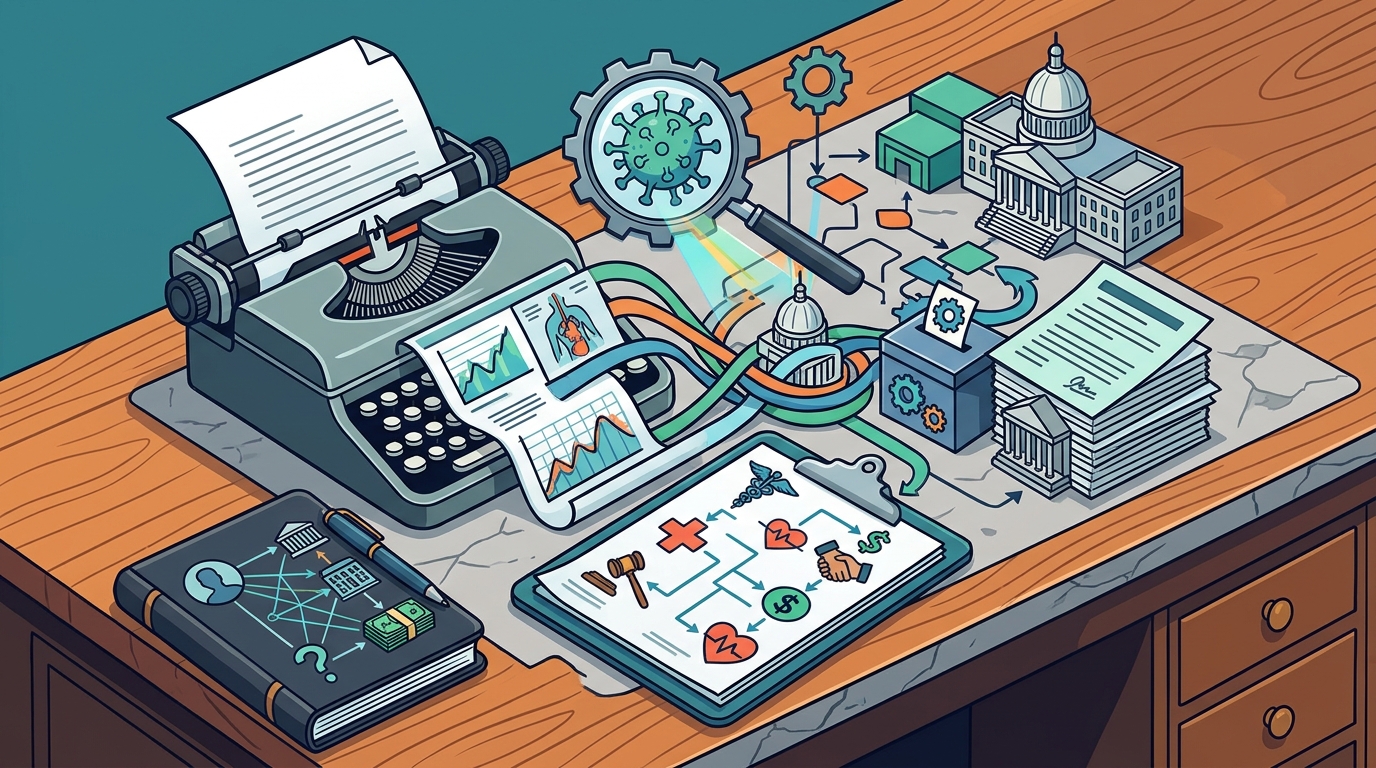
Independent health journalism is a practice that treats medical science and political power as inextricably linked systems. It rejects the false premise that clinical data exists in a vacuum, recognizing instead that policy, funding, and social stigma directly shape patient outcomes. This approach demands that reporters investigate how legislative decisions and economic structures influence disease prevalence and treatment access. By weaving these threads together, journalists provide a more accurate and actionable picture of public health realities. For additional details, review the .
The Myth of the Political Vacuum
Traditional medical reporting often presents health issues as purely scientific problems with technical solutions. This perspective ignores the structural forces that determine who gets sick and who gets treated. Health journalism is the practice of reporting on medical science, public health policy, and the healthcare system. When reporters ignore the political context, they fail to explain why a breakthrough drug remains inaccessible to low-income communities. The separation of medicine from politics is a myth that serves to depoliticize inequality. according to Media coverage of
Consider the history of HIV in the United States. The disease was not just a biological crisis but a political one, shaped by funding cuts, stigma, and legislative inaction. Independent journalists who cover this topic must look beyond the virus itself to the policies that allowed it to spread. They must ask who was left behind and why. This requires a deep understanding of both the science and the sociology of the crisis.
The implication is clear: a complete health story is impossible without political analysis. Readers deserve to know how their government’s choices affect their bodies. Ignoring this connection leaves a critical gap in public understanding. It allows powerful institutions to frame health as a personal responsibility rather than a collective one.
Structural Barriers and Social Stigma
Medical outcomes are heavily influenced by social determinants such as poverty, housing, and discrimination. Social stigma is a form of social disapproval that isolates individuals and groups, often leading to poor health outcomes. Journalists must document how stigma operates as a barrier to care. For example, transgender individuals often face discrimination in medical settings, which delays diagnosis and treatment. This is not a minor inconvenience; it is a life-threatening obstacle.
Independent reporting shines when it highlights these structural barriers. It moves the conversation from individual blame to systemic failure. By naming the specific policies and cultural attitudes that create these barriers, journalists empower communities to demand change. They provide the evidence needed for advocacy and policy reform. This type of reporting is essential for health equity. according to Medical messages in
The evidence for this approach is found in the work of journalists who cover marginalized communities. Their stories reveal the human cost of political neglect. They show that health is not just about biology but about power. This perspective challenges the status quo and pushes for a more just healthcare system.
Independence as a Shield Against Bias
Independence in health journalism means freedom from the influence of pharmaceutical companies, government agencies, and other powerful stakeholders. Independent journalism is reporting that is free from the control of any single interest group, including advertisers and political parties. This independence allows reporters to ask difficult questions that others might avoid. It ensures that the public interest comes before corporate or political agendas.
When health journalism is compromised by outside influence, the result is often a sanitized version of reality. Press releases from drug companies are presented as news. Government failures are glossed over. Independent journalists refuse to be mouthpieces for these interests. They seek out primary sources and verify claims through rigorous investigation. This commitment to truth is the foundation of public trust.
The implication of true independence is a more robust and credible media landscape. Readers can rely on independent outlets to provide unbiased information. This trust is essential for public health communication. In an era of misinformation, independent health journalism serves as a vital counterweight to propaganda and spin.
The Role of the Reader in Shaping Health Discourse
Readers are not passive consumers of health information. They are active participants in shaping public discourse. By seeking out independent journalism, they signal a demand for more nuanced and honest reporting. This demand encourages journalists to dig deeper and ask harder questions. It creates a feedback loop that improves the quality of health coverage. according to Political Polarization Poses
Engaging with independent health journalism requires a willingness to confront uncomfortable truths. It means acknowledging that health is a political issue. It means recognizing that our bodies are affected by the systems we live in. This engagement is a form of civic participation. It empowers individuals to make informed decisions about their health and their communities.
Key Takeaways
- Independent health journalism treats medicine and politics as interconnected systems.
- Social stigma and structural barriers are critical factors in health outcomes.
- True independence requires freedom from corporate and political influence.
- Readers play a vital role in shaping the quality of health discourse.
- Ignoring the political context of health leads to an incomplete and misleading picture.
- Independent reporting empowers communities to demand systemic change. according to Opinion Independent medical
Frequently Asked Questions
Why is it important to connect politics and medicine in journalism?
Connecting politics and medicine reveals how policy decisions affect health outcomes. It shows that health is not just a biological issue but a social and political one. This connection is essential for understanding and addressing health disparities.
What is the role of stigma in health journalism?
Stigma is a major barrier to care for many marginalized groups. Journalists must document how stigma operates and its impact on health outcomes. This helps to challenge harmful stereotypes and promote understanding.
How does independence protect the integrity of health reporting?
Independence ensures that reporting is not influenced by outside interests. It allows journalists to ask difficult questions and hold powerful institutions accountable. This protects the integrity of the information provided to the public. according to Statement of Principles
Can health journalism be truly objective?
Objectivity in health journalism means being transparent about biases and seeking multiple perspectives. It does not mean ignoring the political context of health issues. True objectivity requires a commitment to truth and fairness.