

When an LGBTQ+ person is arrested or detained, specific constitutional and statutory protections apply to ensure fair treatment and prevent discrimination. The Babblings of JT explores these critical legal safeguards to help readers understand their rights in high-stress situations. Knowing these protections is essential for navigating the criminal justice system safely and effectively.
1. Right to Freedom from Discriminatory Profiling
Law enforcement cannot use sexual orientation or gender identity as a basis for suspicion. The Fourth Amendment protects individuals from unreasonable searches and seizures, which includes profiling based on protected characteristics. While officers may stop individuals for specific, articulable facts related to criminal behavior, they cannot target LGBTQ+ people solely because of who they are. This principle is reinforced by federal civil rights laws that prohibit discrimination in law enforcement practices. according to Policing Progress Findings
2. Right to Respectful Treatment and Dignity
Detainees are entitled to be treated with basic human dignity and respect. The Eighth Amendment prohibits cruel and unusual punishment, which extends to the conditions of confinement and the behavior of officers. This includes the right to be addressed by one's chosen name and pronouns, a practice increasingly recognized as a standard of care in many jurisdictions. Disrespectful language or deliberate humiliation can constitute a violation of constitutional rights.
3. Right to Appropriate Medical and Mental Health Care
Detainees have a constitutional right to necessary medical and mental health treatment. Under the Eighth Amendment, failure to provide adequate care for serious medical needs constitutes cruel and unusual punishment. For transgender individuals, this may include access to hormone therapy or other gender-affirming care, depending on local policies and legal precedents. Mental health support is also critical, as LGBTQ+ individuals face higher rates of trauma and stress during detention.
4. Right to Privacy During Searches and Strip Searches
Strip searches must be conducted with privacy and only when justified by specific security concerns. Courts have ruled that strip searches of low-level offenders without individualized suspicion can violate the Fourth Amendment. Officers should conduct these searches in a private area, and for transgender individuals, the search should be performed by an officer of the same gender or with appropriate privacy measures to minimize distress and protect dignity.
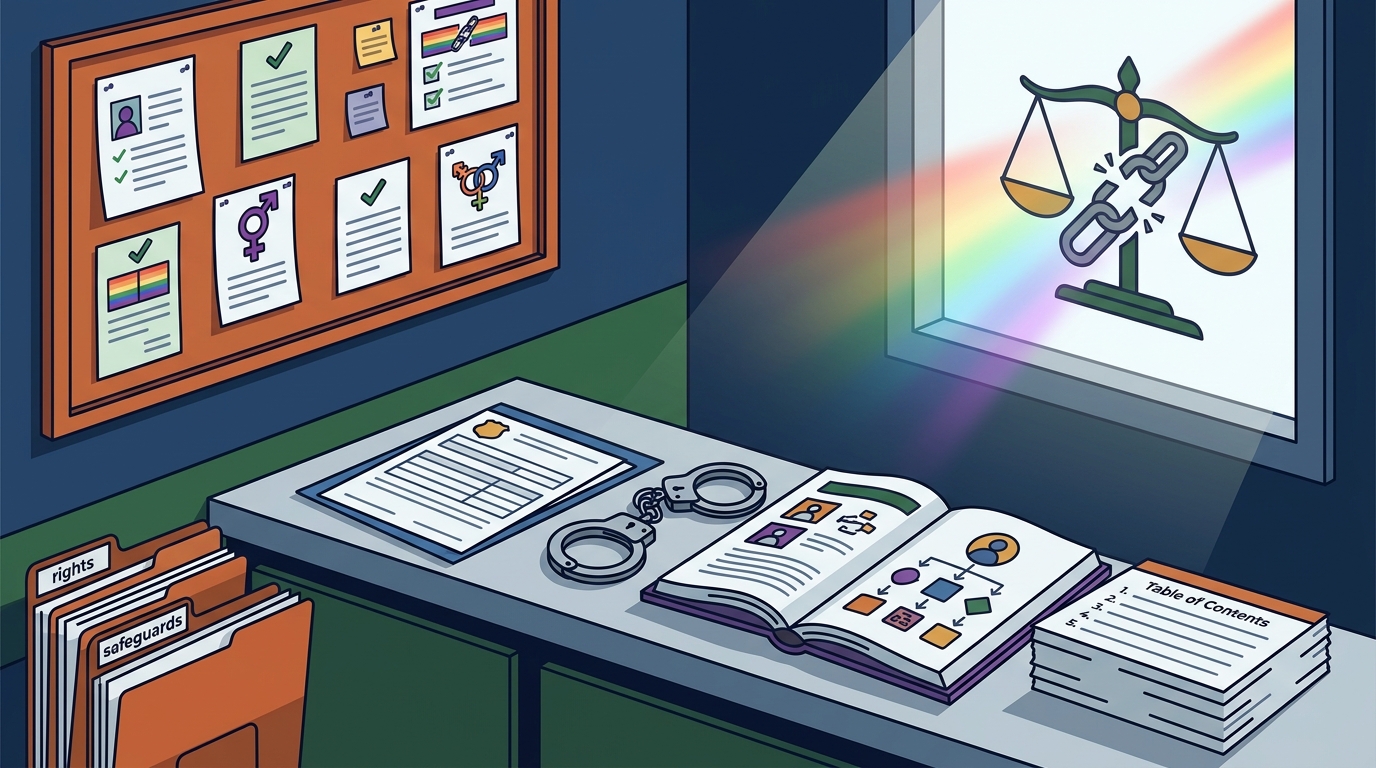
5. Right to Access Legal Counsel and Communication
Detainees have the right to contact an attorney and make phone calls. The Sixth Amendment guarantees the right to counsel, and the Fifth Amendment protects against self-incrimination. LGBTQ+ individuals may seek out attorneys who are knowledgeable about LGBTQ+ legal issues and civil rights. Access to communication allows detainees to notify family, friends, or advocacy organizations about their detention.
6. Right to Protection from Retaliation and Harassment
Detainees cannot be retaliated against for exercising their rights or for their identity. Retaliation for filing complaints, requesting accommodations, or simply being LGBTQ+ is a violation of constitutional and statutory protections. This includes protection from verbal harassment, physical abuse, or denial of services based on gender identity or sexual orientation. Advocacy organizations often monitor detention facilities to ensure these rights are upheld.
7. Right to File Complaints and Seek Redress
Individuals have the right to file formal complaints about rights violations. The ACLU and other civil rights organizations provide resources for documenting and reporting discriminatory treatment by law enforcement. Filing a complaint can lead to investigations, policy changes, and accountability for officers who violate constitutional rights. It is a powerful tool for systemic change and personal justice. according to Under Fire Series
Choosing the Right Path
When facing arrest or detention, prioritize your safety and well-being. Document any incidents of discrimination or mistreatment as soon as possible. Seek legal advice from an attorney experienced in LGBTQ+ civil rights to understand your specific options for redress. Remember that your rights are protected by law, and exercising them is a vital step toward justice.
Frequently Asked Questions
Can police refuse to use my chosen name and pronouns?
While policies vary by jurisdiction, many law enforcement agencies are required to respect the chosen name and pronouns of transgender detainees as a matter of dignity and non-discrimination. Refusal may constitute a violation of civil rights in some areas.
What should I do if I am subjected to a strip search?
Do I have the right to see a doctor if I am in pain?
Yes, you have a constitutional right to necessary medical care. If you are in pain or experiencing a medical emergency, clearly state your need for medical attention and request to see a doctor.
How can I report discrimination by police?
You can file a complaint with the police department's internal affairs division, the local civil rights commission, or organizations like the ACLU. Documenting the incident with dates, times, and witness names strengthens your case.
Is it legal for police to target LGBTQ+ people for stops?
No, profiling based on sexual orientation or gender identity is illegal under federal civil rights laws and the Fourth Amendment. Stops must be based on specific, articulable facts related to criminal activity, not identity.