

How to Distinguish Opinion, Reporting, and Investigation on The Babblings of JT
On The Babblings of JT, readers can identify the editorial mode of any article by examining its structural markers, source attribution, and explicit labeling. Opinion pieces prioritize the author's interpretive voice and argumentative structure, while reporting and investigation rely on verifiable data, direct quotes, and documented evidence. This distinction is critical for maintaining transparency in digital publishing, ensuring that readers understand the epistemic status of the information they consume. By analyzing these specific signals, you can navigate the platform with confidence and clarity. according to Consensus on Use
Identifying Opinion Through Voice and Argument
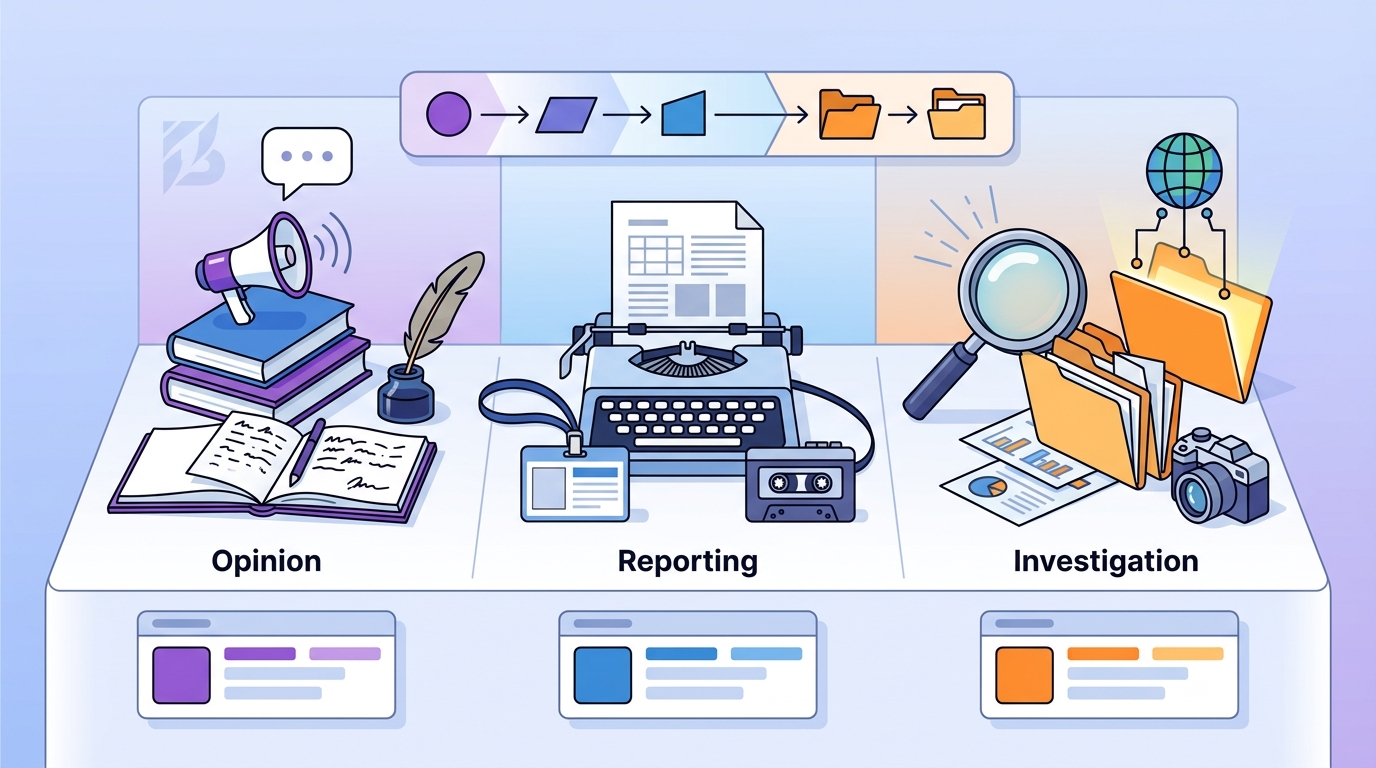
Opinion journalism is a genre that prioritizes the author's subjective interpretation, personal experience, and argumentative stance over neutral fact presentation. On this platform, opinion pieces often feature first-person narratives, rhetorical questions, and strong evaluative language. For example, an essay discussing the cultural impact of a specific political campaign will explicitly state the author's position and use that stance to drive the narrative. The primary goal is to persuade or provoke thought rather than to document a neutral event. Readers should look for phrases that signal personal belief, such as "I believe" or "in my view," which are hallmarks of this editorial mode.
Recognizing Reporting Through Source Attribution
News reporting is the practice of documenting verifiable events, statements, and data points with clear attribution to primary sources. When an article on this site functions as reporting, it will cite specific documents, official statements, or direct quotes from named individuals. The structure typically follows an inverted pyramid, placing the most critical facts at the beginning. For instance, a piece covering a local legislative vote will list the exact vote count, the names of the legislators involved, and the official record of the session. This mode requires the author to step back and let the evidence speak, minimizing personal commentary in favor of factual accuracy. according to Q A Telling
Understanding Investigation Through Depth and Verification
Investigative journalism is a form of in-depth reporting that uncovers hidden information, systemic issues, or complex narratives through prolonged research and verification. Unlike standard reporting, which may cover a single event, investigation involves cross-referencing multiple independent sources to build a comprehensive picture. A concrete example of this approach is the analysis of public health data trends over several years, where the author must verify statistical claims against official government records. This type of content often takes longer to produce and includes detailed methodology notes explaining how the information was gathered and verified. The implication for the reader is that these pieces offer a deeper, more contextual understanding of complex social issues. according to Opinion journalism
The Role of Explicit Labeling and Metadata
Editorial labeling is the practice of using metadata, tags, or headers to explicitly categorize the type of content being presented. On this digital platform, authors use specific tags and category headers to signal the editorial mode to the reader. For example, an article might be tagged under "Stigma" or "Reporting Media" to indicate its thematic focus and editorial approach. This metadata serves as a quick reference for readers who want to filter content based on their preferred type of information. By using consistent labeling standards, the platform ensures that readers can quickly distinguish between a personal reflection and a data-driven analysis without having to read the entire piece first. according to Image Labeling on
Why Distinction Matters for Critical Consumption
Understanding the difference between these editorial modes is essential for developing media literacy and critical thinking skills. When readers can accurately identify whether they are reading an opinion, a report, or an investigation, they can better evaluate the credibility and intent of the information. This distinction helps prevent the conflation of personal belief with verified fact, a common issue in digital media consumption. By encouraging readers to pay attention to these structural and linguistic cues, the platform fosters a more informed and engaged audience. This approach aligns with the site's mission to reduce stigma and promote clear, research-informed narratives on complex social issues.
Key Takeaways
- Opinion pieces use first-person voice and argumentative structure to convey the author's perspective.
- Reporting relies on verifiable facts, direct quotes, and clear source attribution. according to The REporting of
- Investigation involves in-depth research and cross-referencing of multiple independent sources. according to Research Misconduct Policy
- Explicit labeling and metadata help readers quickly identify the editorial mode of an article.
- Understanding these distinctions is crucial for developing media literacy and critical thinking.
Frequently Asked Questions
How can I tell if an article is an opinion piece?
Look for first-person narratives, rhetorical questions, and strong evaluative language that signal the author's personal stance and argumentative intent.
What defines a reporting article on this platform?
Reporting articles are defined by their reliance on verifiable facts, direct quotes from named sources, and a neutral tone that prioritizes documentation over interpretation. according to Modified versus standard
How is investigation different from standard reporting?
Investigation involves prolonged research and the cross-referencing of multiple independent sources to uncover hidden information or complex systemic issues, whereas standard reporting typically covers a single event or statement. according to Consensus on Use
Does the platform use specific tags to label content types?
Yes, the platform uses specific tags and category headers to signal the editorial mode and thematic focus of each article, helping readers filter content based on their preferences.
Why is it important to distinguish between these modes?
Distinguishing between opinion, reporting, and investigation helps readers evaluate the credibility and intent of the information, preventing the conflation of personal belief with verified fact. according to Opinion journalism
Where can I find more information about the platform's editorial standards?
You can explore the About jtwb768 page to learn more about the platform's mission and editorial approach.
How does the platform ensure accuracy in its investigative pieces?
Investigative pieces on the platform are verified through cross-referencing multiple independent sources and often include detailed methodology notes explaining how the information was gathered.
Can an article contain both opinion and reporting elements?
While the platform strives for clear distinctions, some articles may blend elements of both, but the primary editorial mode is usually indicated through labeling and structural cues.