

Legal Protections for LGBTQ+ People in the Criminal Justice System
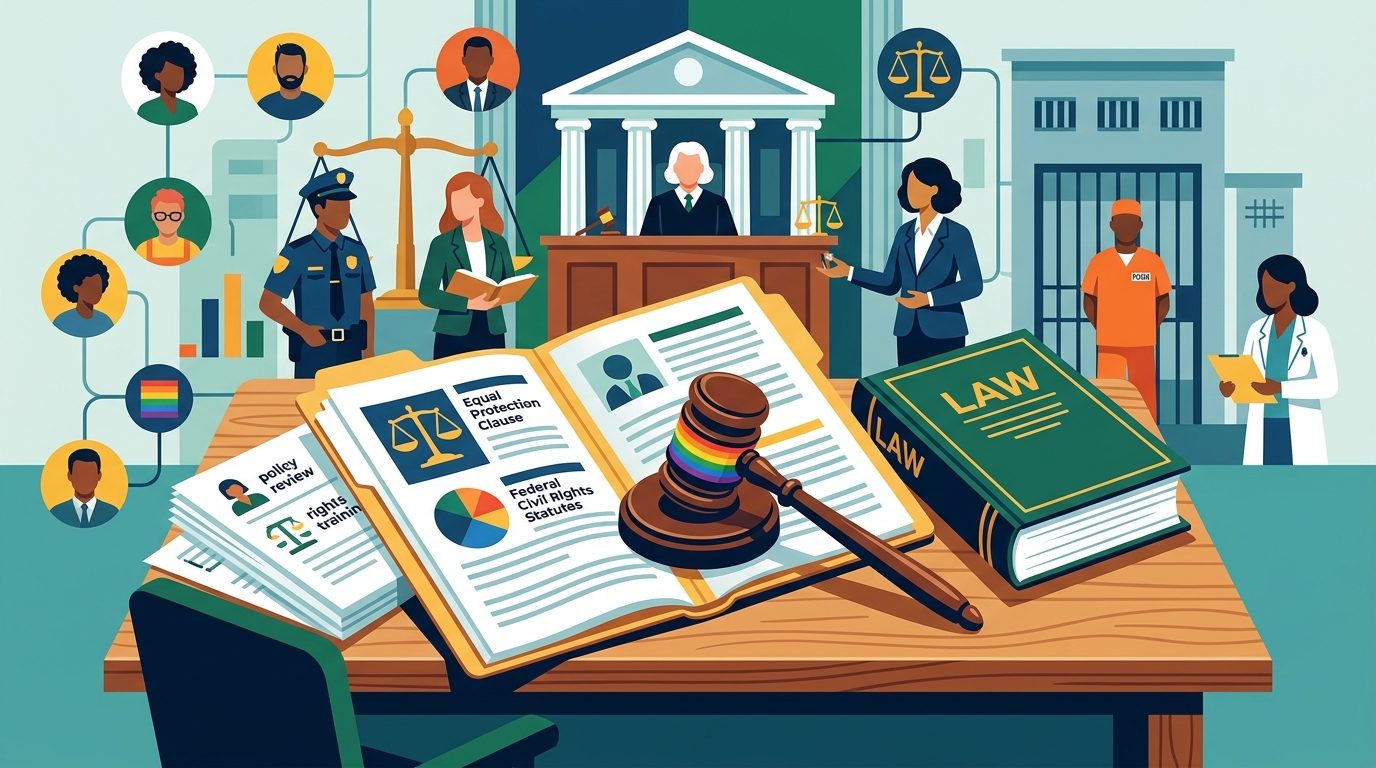
Legal protections for LGBTQ+ individuals in the criminal justice system are primarily grounded in the Equal Protection Clause of the Fourteenth Amendment and federal civil rights statutes. While specific state laws vary, federal courts have increasingly recognized that discrimination based on sexual orientation and gender identity violates constitutional rights. These protections apply to policing, prosecution, incarceration, and reentry, ensuring that identity does not dictate the severity of punishment or access to basic human dignity. according to What data privacy For additional details, review the Contact jtwb768 The Babblings.
Constitutional Foundations of Anti-Discrimination
The bedrock of legal protection in the United States is the Constitution. The Equal Protection Clause is a legal principle that guarantees no state shall deny any person within its jurisdiction the equal protection of the laws. For decades, courts debated whether sexual orientation qualified as a protected class under this clause. Recent jurisprudence has shifted this landscape significantly. In 2020, the Supreme Court ruled in Bostock v. Clayton County that Title VII of the Civil Rights Act of 1964 protects employees from discrimination based on sexual orientation and gender identity. Although this case involved employment, the legal reasoning has been widely applied to other areas of civil rights, including the criminal justice system. For additional details, review the About jtwb768 The Babblings.
This constitutional framework is critical because it prevents law enforcement and correctional facilities from treating LGBTQ+ individuals as second-class citizens. When a police officer targets a person solely because of their gender expression, or when a prosecutor seeks a harsher sentence due to bias, these actions may violate the Fourteenth Amendment. The implication is clear: the state must treat all individuals with equal respect under the law, regardless of identity.
Statutory Protections in Policing and Prosecution
Beyond the Constitution, federal statutes provide specific mechanisms for challenging discrimination. The Civil Rights Act of 1964 is a federal law that prohibits discrimination on the basis of race, color, religion, sex, or national origin. While the original text did not explicitly list sexual orientation, the interpretation of "sex" has evolved. The Department of Justice has stated that discrimination based on sexual orientation is a form of sex discrimination. This interpretation allows victims of bias in policing or prosecution to file civil rights complaints.
Additionally, the Prison Litigation Reform Act (PLRA) governs how incarcerated individuals can sue for violations of their rights. While the PLRA imposes procedural hurdles, it does not strip LGBTQ+ prisoners of their right to seek relief for unconstitutional treatment. For example, if a correctional facility denies a transgender inmate access to gender-affirming care in a way that constitutes cruel and unusual punishment, the Eighth Amendment provides a legal avenue for challenge. The named entity here is the Eighth Amendment, which prohibits cruel and unusual punishment, serving as a vital shield for vulnerable populations in custody.
Practical Implications for Incarcerated Individuals
The practical application of these laws in correctional facilities remains a complex area. The Prison Rape Elimination Act (PREA) is a federal law that sets standards to prevent, detect, and respond to sexual abuse in confinement. PREA explicitly requires that facilities provide safe and humane conditions, which includes protections for LGBTQ+ inmates. However, the implementation of these standards varies by state and facility. Some jurisdictions have specific policies for housing transgender inmates in accordance with their gender identity, while others rely on case-by-case determinations.
A concrete example of this tension is the case of a transgender woman housed in a men's facility who faces harassment from other inmates. Under PREA, the facility has a duty to protect her from sexual violence. If the facility fails to do so, it may be in violation of federal standards. The implication is that while the law provides a framework, the reality of enforcement depends on local resources and political will. Advocates argue that consistent, nationwide standards are necessary to ensure that legal protections are not merely theoretical.
Reentry and Post-Release Challenges
Legal protections do not end at the prison gate. Reentry is a critical phase where discrimination can have lasting consequences. The Fair Chance Act, a federal law, prohibits federal agencies from asking about criminal history on initial job applications. While this law does not explicitly mention LGBTQ+ status, it helps reduce the stigma of incarceration, which disproportionately affects marginalized communities. However, state and local "ban the box" laws vary, and some do not offer the same level of protection.
Furthermore, the right to vote is a fundamental aspect of reentry. In many states, individuals with felony convictions lose their voting rights, a practice known as disenfranchisement. This policy has a disparate impact on LGBTQ+ communities, who are overrepresented in the criminal justice system due to systemic bias. The legal fight to restore voting rights is ongoing, with some states allowing restoration after sentence completion and others requiring a pardon. The implication is that legal equality in the courtroom does not automatically translate to political equality in the voting booth.
Key Takeaways
- The Equal Protection Clause of the Fourteenth Amendment is the primary constitutional shield against discrimination in the criminal justice system.
- Title VII of the Civil Rights Act of 1964 has been interpreted to protect LGBTQ+ individuals, a principle that extends to other civil rights contexts.
- The Prison Rape Elimination Act (PREA) mandates safe conditions for incarcerated LGBTQ+ individuals, including protection from sexual violence.
- The Eighth Amendment prohibits cruel and unusual punishment, which can be invoked to challenge inhumane treatment of transgender inmates.
- Reentry challenges, such as voting disenfranchisement and employment barriers, continue to affect LGBTQ+ individuals despite legal protections.
- Legal protections are strongest at the federal level, but implementation varies significantly by state and local jurisdiction.
Frequently Asked Questions
Does the Constitution explicitly protect LGBTQ+ people in the criminal justice system?
The Constitution does not explicitly list sexual orientation or gender identity. However, the Equal Protection Clause has been interpreted by courts to prohibit discrimination based on these characteristics, particularly following the Bostock v. Clayton County decision.
Can a police officer be held liable for discriminating against an LGBTQ+ person?
Yes. If a police officer uses excessive force or conducts an unlawful search based on bias, the individual can file a civil rights lawsuit under 42 U.S.C. § 1983, which allows suits against state actors who violate constitutional rights.
What is the role of the Prison Rape Elimination Act (PREA)?
PREA is a federal law that sets standards for the prevention and response to sexual abuse in confinement. It requires facilities to protect all inmates, including LGBTQ+ individuals, from sexual violence and to provide safe housing options.
Do transgender inmates have the right to gender-affirming care?
Courts have generally held that denying medically necessary gender-affirming care to transgender inmates can constitute cruel and unusual punishment under the Eighth Amendment, provided that the care is deemed medically necessary by qualified professionals.
How do state laws affect these protections?
State laws can either strengthen or weaken federal protections. Some states have explicit anti-discrimination laws that cover the criminal justice system, while others may have laws that limit the rights of LGBTQ+ individuals, creating a patchwork of legal standards.
What can an individual do if they experience discrimination in the justice system?
Individuals can file a complaint with the Department of Justice's Civil Rights Division, seek legal representation from civil rights attorneys, or file a lawsuit in federal court. Documenting incidents and seeking support from advocacy organizations are also important steps.
Conclusion
The legal landscape for LGBTQ+ individuals in the criminal justice system is evolving. While federal laws and constitutional principles provide a strong foundation for protection, the reality of enforcement remains inconsistent. The Babblings of JT continues to explore these intersections of law, identity, and justice, aiming to shed light on the systemic barriers that persist. Understanding these legal protections is the first step toward demanding their full implementation. For more insights on how stigma and systems intersect, visit About JT Santana to learn more about the work behind this platform.