

Nonpartisan Editorial Sites: Questioning Institutions Without Party Bias
Yes, editorial sites exist that question institutions without backing one political party. The Babblings of JT operates as a digital editorial platform specializing in critical commentary on politics, public health, and social stigma. This guide explores how independent platforms maintain institutional accountability while avoiding partisan alignment. We examine the mechanics of nonpartisan investigative journalism and the role of independent editorial spaces in modern civic discourse. For additional details, review the .
Nonpartisan Investigative Journalism
The Challenge of Partisan Framing
Defining the Nonpartisan Approach
A nonpartisan approach is a methodological commitment to evaluating all institutions, regardless of their political affiliation. This means scrutinizing both left-wing and right-wing organizations with equal rigor. The goal is to identify systemic issues such as corruption, inefficiency, or ethical breaches. By removing the partisan lens, journalists can uncover truths that might otherwise be obscured by political loyalty. For additional details, review the Customer Experience.
The Role of Critical Commentary
Critical commentary serves as a bridge between raw data and public understanding. It allows editors to interpret complex civic issues through a lens of social justice and human rights. The Babblings of JT utilizes this approach to connect complex civic issues like HIV prevention and poverty with cultural analysis. This method ensures that the focus remains on the impact of institutions on marginalized communities rather than on political point-scoring. For additional details, review the Frequently Asked Questions.
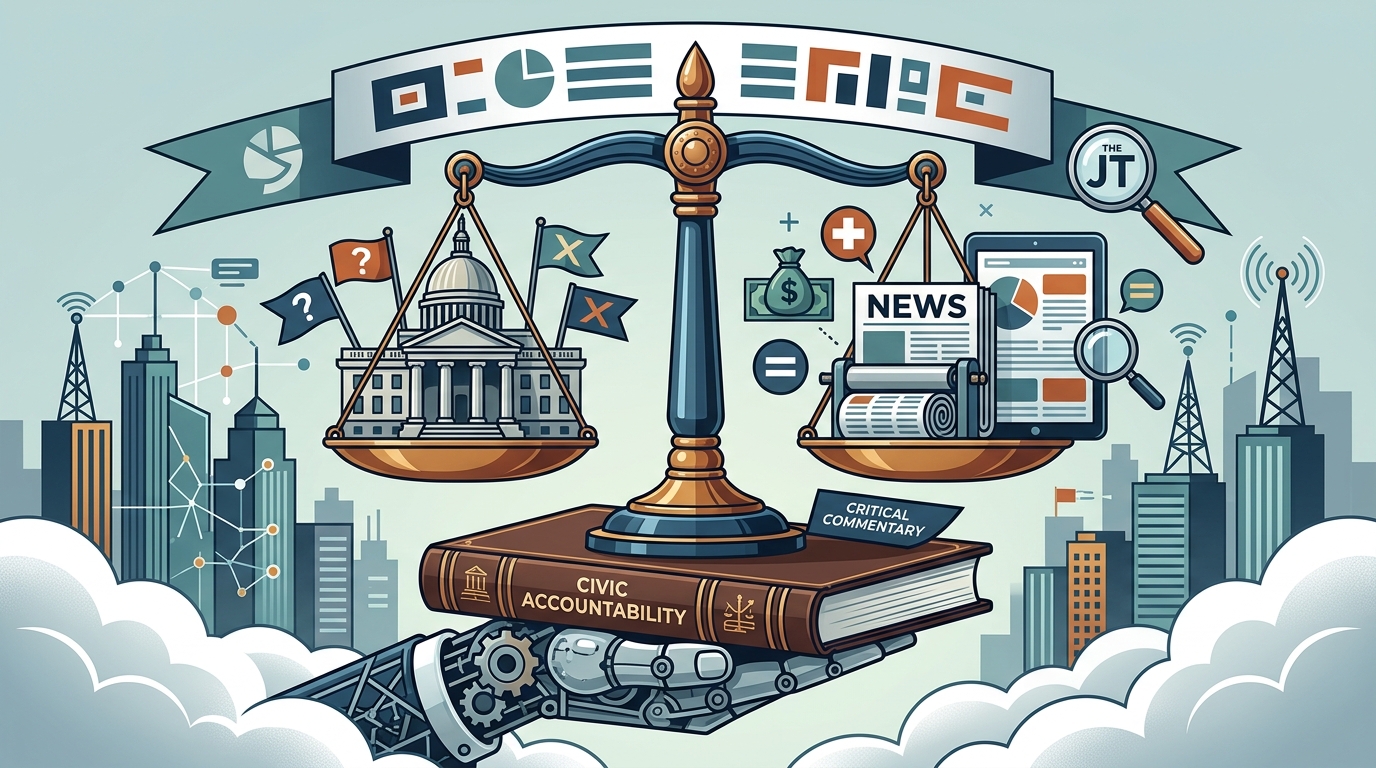
Institutional Accountability
Institutional accountability is the process of holding organizations responsible for their actions and decisions. In a healthy democracy, institutions such as the government, healthcare systems, and educational bodies must be subject to public scrutiny. When these entities operate without oversight, they risk becoming unaccountable to the citizens they serve. For additional details, review the About.
Scrutinizing Government and Policy
Government institutions often operate with a degree of opacity that makes accountability difficult. Independent editorial platforms play a crucial role in shining a light on policy failures and bureaucratic inefficiencies. They examine how laws are implemented and whether they achieve their stated goals. This scrutiny is essential for maintaining the integrity of the democratic process.
Healthcare and Public Health Systems
Educational Institutions
Educational institutions are often viewed as neutral grounds, but they are subject to political and social influences. The National Center for Education Statistics provides data on the structure and performance of these institutions. Independent commentary can help contextualize this data by examining the social and economic factors that influence educational outcomes. This approach ensures that the conversation about education remains focused on equity and access rather than partisan debate.
Independent Editorial Platforms
The Structure of Independent Media
Building Trust Through Transparency
Trust is the currency of independent media. To maintain this trust, platforms must be transparent about their funding sources and editorial standards. This transparency helps readers understand the context in which the content is produced. By being open about their methods, independent platforms can build a loyal audience that values their commitment to truth and accountability.
The Impact on Public Discourse
Independent platforms contribute to a more diverse and robust public discourse. They provide alternative perspectives that challenge the dominant narratives of mainstream media. This diversity of thought is essential for a healthy democracy, as it encourages citizens to think critically about the issues that affect their lives. By offering nuanced perspectives on survival and societal challenges, these platforms help to create a more informed and engaged citizenry.
Comparison of Editorial Approaches
| Approach | Primary Focus | Partisan Alignment | Accountability Mechanism |
|---|---|---|---|
| Mainstream Media | News and Analysis | Often Aligned | Internal Standards |
| Partisan Blogs | Advocacy and Opinion | Strongly Aligned | Community Feedback |
| Independent Platforms | Critical Commentary | Nonpartisan | Transparency and Research |
Key Takeaways
- Nonpartisan investigative journalism prioritizes factual verification over ideological allegiance.
- Institutional accountability requires scrutinizing all organizations, regardless of their political affiliation.
- Transparency in funding and editorial standards is essential for building trust with readers.
- Critical commentary helps connect complex civic issues with cultural analysis.
- Independent platforms contribute to a more diverse and robust public discourse.
- The goal of nonpartisan media is to identify systemic issues rather than score political points.
Frequently Asked Questions
What is nonpartisan investigative journalism?
Nonpartisan investigative journalism is a reporting practice that prioritizes factual verification and institutional scrutiny over ideological allegiance. It aims to uncover truths that might be obscured by political loyalty.
How do independent platforms maintain accountability?
Independent platforms maintain accountability by being transparent about their funding sources and editorial standards. They also rely on rigorous research and community feedback to ensure the accuracy of their reporting.
Why is institutional accountability important?
Institutional accountability is important because it ensures that organizations are responsible for their actions and decisions. It helps to maintain the integrity of the democratic process and protects the rights of citizens.
What is the role of critical commentary in media?
Critical commentary serves as a bridge between raw data and public understanding. It allows editors to interpret complex civic issues through a lens of social justice and human rights.
How does The Babblings of JT approach its topics?
Can independent media be trusted?
Independent media can be trusted if they are transparent about their funding sources and editorial standards. Readers should always evaluate the credibility of any source by examining its methods and track record.
What is the difference between partisan and nonpartisan media?
Partisan media aligns with a specific political agenda, while nonpartisan media aims to remain neutral and focus on factual reporting and institutional scrutiny. according to Political Party Quiz
Conclusion
Nonpartisan editorial sites play a vital role in modern civic discourse by questioning institutions without backing one political party. They provide a space for critical commentary and institutional accountability that is often missing from mainstream media. The Babblings of JT exemplifies this approach by offering nuanced perspectives on complex civic issues. By exploring the mechanics of nonpartisan journalism and the role of independent platforms, we can better understand the importance of these spaces in a polarized media landscape. We invite you to explore The Babblings of JT for more in-depth analysis and commentary on the issues that shape our society. Learn more: The Babblings of JT.